Let's be honest. Most chicken pot pie with biscuits recipes promise comfort but deliver a soggy biscuit lid floating on top of a bland, watery filling. It's a letdown. After testing more versions than I care to admit—some from famous chefs, some from my grandma's church cookbook—I've nailed a method that fixes every common flaw. This isn't just another recipe. It's the blueprint for a perfect, creamy chicken and vegetable filling topped with fluffy, golden-brown biscuits that actually hold their texture. The best part? I've built in smart shortcuts for busy weeknights without sacrificing an ounce of flavor.
What You'll Find Inside
The Smart Ingredient Breakdown: Why Each One Matters
You can't build a great house with cheap lumber. Same goes for pot pie. Let's talk about what goes in and, more importantly, why.
| Ingredient | My Recommendation & Why | Swaps & Notes |
|---|---|---|
| Chicken | Rotisserie chicken. This is the ultimate weeknight hack. About 3 cups shredded. The skin and roasting juices add depth you won't get from plain boiled breast. | Leftover roasted chicken or thighs work. Poach 1.5 lbs of boneless thighs in broth if you prefer. |
| Vegetables | Frozen mixed veggies (peas, carrots, corn, green beans). Yes, frozen. They're pre-chopped, flash-frozen at peak freshness, and they won't waterlog your filling like some fresh veggies can. | Fresh is fine! Sauté 1 diced onion, 2 diced carrots, and 2 ribs diced celery until soft before proceeding. |
| Fat & Flour (The Roux) | Butter and all-purpose flour. Equal parts by weight (5 tbsp each). Butter for flavor, AP flour for the right thickening power. | For a richer taste, use 3 tbsp butter + 2 tbsp chicken fat skimmed from broth. |
| Liquid | Low-sodium chicken broth and whole milk. A 2:1 ratio (2 cups broth, 1 cup milk). Low-sodium broth lets you control salt. Whole milk adds creaminess without heaviness. | Substitute 1/2 cup milk with heavy cream for extra decadence. Use all broth for a lighter gravy. |
| Biscuit Topping | Homemade drop biscuits. Flour, baking powder, salt, cold butter, milk. They're easier than rolled biscuits and create craggy edges that get beautifully crisp. | In a true pinch, refrigerated canned biscuit dough can be used. Separate and place on top. Results will be different. |
Pro Insight: The single biggest mistake I see? Using a store-bought cream of chicken soup as the gravy base. It's often overly salty, has a processed flavor, and contains stabilizers that can make the texture gummy. A simple roux-based gravy takes only 5 extra minutes and makes a world of difference.
Step-by-Step Guide: From Filling to Finish
Follow this sequence. It's designed for efficiency and to prevent common pitfalls.
1. Prep Your Filling Components
Shred your rotisserie chicken, discarding the skin and bones. You want bite-sized pieces, not strings. Measure out 3 cups of frozen vegetables—no need to thaw. Have your 2 cups of broth and 1 cup of milk ready. This mise en place is crucial because once the roux is made, everything moves fast.
2. How to Make the Perfect Gravy (The Roux Method)
Melt 5 tablespoons of butter in a large, deep skillet or Dutch oven over medium heat. Sprinkle in 5 tablespoons of flour. Now, here's the secret most recipes gloss over: cook this paste, stirring constantly, for a full 90 seconds. You want it to smell nutty and look pale blonde. This cooks out the raw flour taste. If you see it darkening beyond a light tan, your heat is too high—start over.
Slowly whisk in the 2 cups of cold chicken broth. Cold prevents lumps better than warm. Whisk vigorously until smooth. Then whisk in the 1 cup of milk. Bring to a simmer, and let it bubble gently for 3-4 minutes until it thickens enough to coat the back of a spoon. Season with 1 tsp kosher salt, 1/2 tsp black pepper, 1/2 tsp dried thyme, and a pinch of celery seed if you have it.
3. Combine and Simmer
Stir in the shredded chicken and frozen vegetables. Bring back to a low simmer and cook for 5-7 minutes. The frozen veggies will thaw and cook, and the whole mixture will thicken slightly more. Taste. Does it need more salt or pepper? Now is the time. Pour this filling into a 9x13 inch baking dish or a 10-inch deep-dish pie plate. Let it cool slightly while you make the biscuits.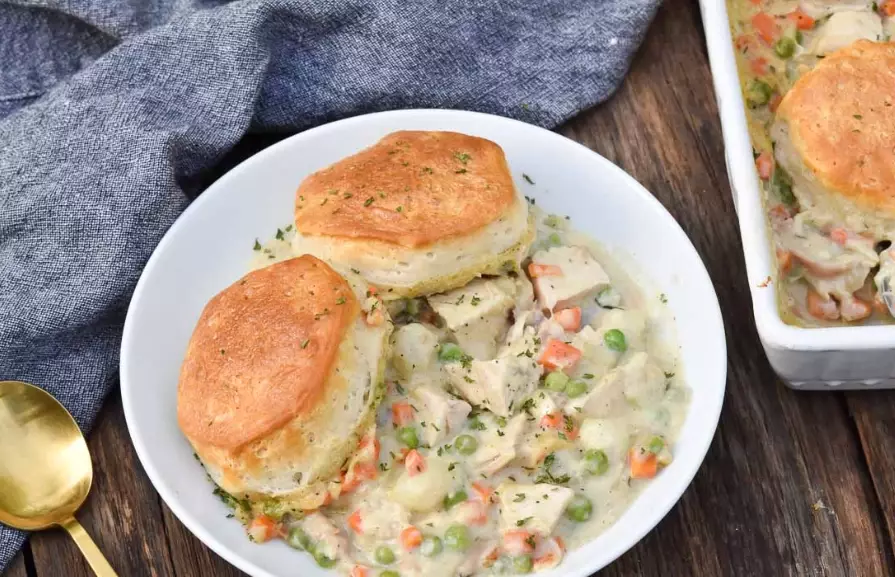
Watch Out: Don't skip the cooling step. Placing cold biscuit dough on a piping hot filling causes the bottom of the biscuits to steam and become gummy before they can rise. A 10-minute rest makes a huge difference.
4. How to Make Foolproof Drop Biscuits
Preheat your oven to 425°F (220°C). In a large bowl, whisk together 2 cups all-purpose flour, 1 tablespoon baking powder, 1/2 teaspoon salt, and 1/2 teaspoon sugar. Grate 6 tablespoons of very cold unsalted butter directly into the flour using a box grater. Toss gently with your fingers to coat the butter shreds in flour.
Pour in 3/4 cup + 2 tablespoons of cold whole milk. Stir with a fork just until a shaggy dough forms and there are no dry pockets. Stop mixing the moment it comes together. Overmixing = tough biscuits. This dough will be wet and sticky—that's perfect for drop biscuits.
5. Assemble and Bake
Drop large, rough dollops of the biscuit dough (about 1/4 cup each) evenly over the slightly cooled filling. You should get 8-9 biscuits. Don't smooth them out; the craggy tops will brown beautifully. Brush the tops lightly with a little melted butter or milk.
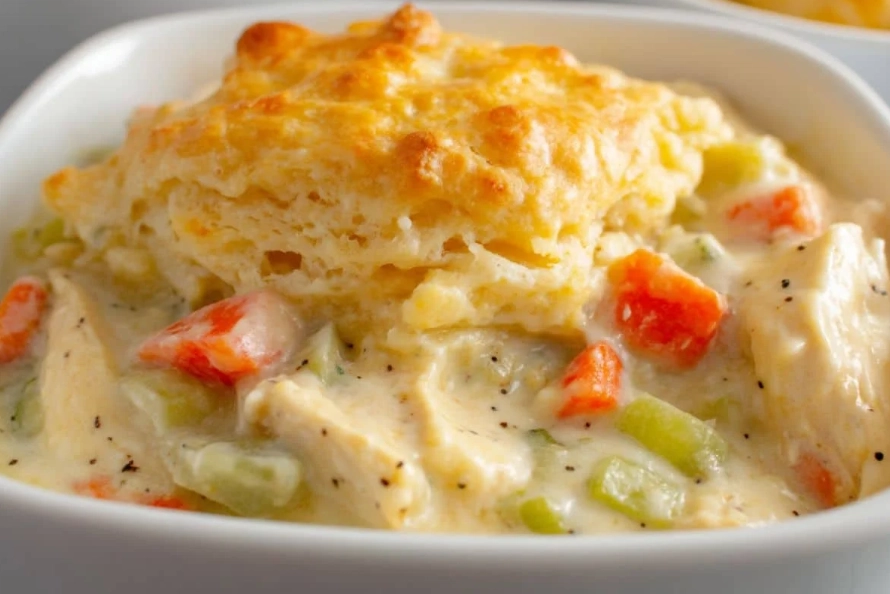
Bake for 20-25 minutes, until the filling is bubbling vigorously around the edges and the biscuits are golden brown on top. An instant-read thermometer inserted into the center of a biscuit should read at least 200°F. Let it rest for 10 minutes before serving. This allows the filling to set, so it doesn't run all over the plate.
Expert Tricks & Common Traps to Avoid
I learned these the hard way so you don't have to.
The Filling is Too Thin/Watery. This happens if you don't simmer the gravy base long enough after adding the liquids, or if you add thawed frozen veggies with lots of ice crystals. Always simmer until it coats a spoon. Use veggies straight from the freezer. If it's still thin, make a quick slurry (1 tbsp each flour and cold water) and whisk it into the bubbling filling.
The Biscuits Sink or Stay Doughy. Two culprits: Filling too hot (steams the bottom) or oven not hot enough. Ensure your oven is fully preheated. That 425°F blast is non-negotiable for a good rise and set.
Bland Flavor. You underseasoned the gravy. Pot pie filling needs more salt and pepper than you think because the biscuits are plain. Taste aggressively after adding the chicken and veggies. A splash of white wine when you deglaze the pan after sautéing fresh veggies, or a teaspoon of soy sauce or Worcestershire stirred into the gravy, adds a deep umami boost no one will pinpoint but everyone will love.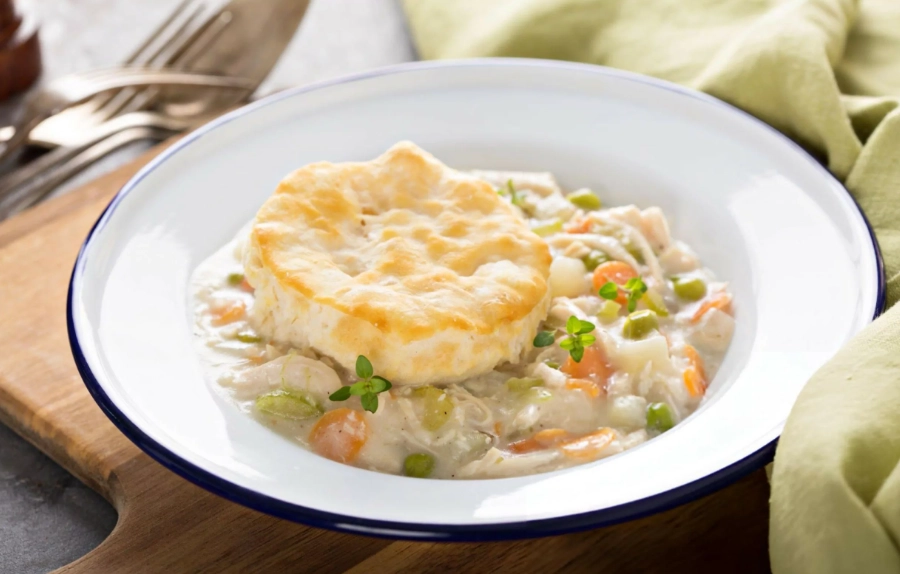
How to Make It Ahead (The Right Way)
This dish is a fantastic make-ahead meal, but you have to do it strategically.
Option 1: Full Prep, Assemble Later. Make the filling, let it cool completely, and store it covered in the fridge for up to 2 days. Make the biscuit dough, drop it onto a parchment-lined sheet, and freeze solid. Transfer frozen dough pucks to a bag. When ready to bake, put the cold filling in the dish, top with the frozen biscuit pucks, and bake. Add 5-7 minutes to the baking time.
Option 2: Fully Baked & Reheated. Bake the whole dish, let it cool completely, then cover and refrigerate for up to 3 days. Reheat individual portions in the microwave. For the whole dish, cover with foil and reheat in a 350°F oven for 20-25 minutes until hot through.
I don't recommend freezing the fully assembled, unbaked dish. The biscuit dough's leavening power can weaken, and the filling texture can suffer.
Your Burning Questions Answered
Can I use store-bought biscuit dough from a can?
You can, but manage your expectations. The canned dough is formulated to be baked on a sheet pan, not on a wet, steaming filling. The bottoms often turn out soggy and undercooked. If you must use it, par-bake the biscuits on a separate sheet for about 2/3 of the time, then place them on the hot filling and finish baking together for the last few minutes. It's more work for an inferior result, in my opinion.
My filling is done, but I'm not ready to bake for an hour. What do I do?
This is a common timing issue. Leave the filling in the pot off the heat. Make the biscuit dough, cover it, and refrigerate it. When you're 30 minutes from wanting to eat, pour the (now cool) filling into the dish, drop the cold biscuit dough on top, and bake. The cold dough on the cool filling works fine; just add 2-3 extra minutes to the bake time if the filling started cold.
 What's the best way to store and reheat leftovers?
Store covered in the fridge for 3-4 days. The biscuits will soften from the fridge's moisture—that's inevitable. To reheat, the microwave is fastest for a single serving (1-2 minutes). To restore some crispness to the biscuits, use a toaster oven or regular oven at 375°F. Place a portion in an oven-safe dish and heat for 10-15 minutes. The edges of the biscuit will re-crisp nicely.
Can I make this in individual ramekins?
Absolutely. It's a great presentation. Divide the filling among 4-6 large, oven-safe ramekins. Top each with 1 or 2 smaller dollops of biscuit dough. Bake at the same temperature, but start checking at 15 minutes, as they will bake faster due to the smaller volume.
Is it safe to use frozen vegetables without cooking them first?
Yes, completely. The U.S. Food and Drug Administration notes that commercially frozen vegetables are blanched before freezing, making them safe to eat. In this recipe, they spend 5-7 minutes simmering in the hot gravy and then 20+ minutes in a 425°F oven. They will be thoroughly cooked. The concern with frozen veggies is excess water, which is why we add them frozen—the minimal ice melt gets incorporated into the gravy.
Reader Comments