Your Crispy Chicken Guide
- Why Bone-In, Skin-On Thighs Are the Air Fryer's Best Friend
- The Non-Negotiable Prep: Your Foundation for Crispiness
- The Air Frying Process: Time, Temp, and the Crucial Flip
- Flavor Twists: Beyond Salt and Pepper
- Troubleshooting: Fixing Common Air Fryer Chicken Thigh Problems
- Letting Them Rest & Serving Ideas
- Important Food Safety & Authority Links
Let's be real for a second. The promise of the air fryer is huge—crispy food with less oil, fast. But when it comes to something like bone-in, skin-on chicken thighs, it's easy to end up with soggy skin, undercooked meat near the bone, or a dry, sad result. I've been there. I've pulled out chicken thighs that looked amazing on top but were somehow still rubbery underneath. It was frustrating.
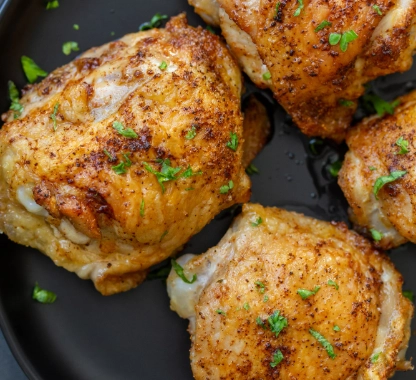
But after what feels like a hundred batches (my family got very tired of chicken for a while), I cracked the code. Air frying bone-in chicken thighs isn't just about throwing them in the basket. It's a simple process, sure, but there are a few non-negotiable steps that make the difference between good and blow-your-mind good. We're talking skin that shatters like glass and meat so juicy it practically squirts. And the best part? It's mostly hands-off time.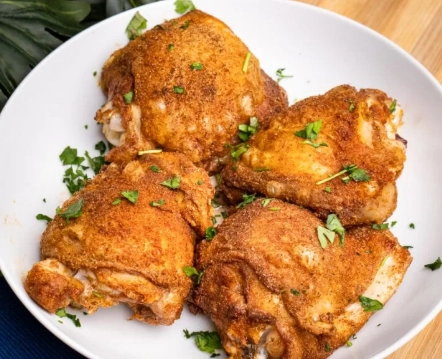
Why Bone-In, Skin-On Thighs Are the Air Fryer's Best Friend
Before we get to the how, let's talk about the why. You could use boneless thighs or breasts, but you'd be missing the point. The bone acts as a heat conductor, helping the meat cook evenly from the inside out. It also adds immense flavor. The skin? That's your prize. When exposed to the air fryer's intense, circulating heat, the skin's fat renders and the proteins undergo the Maillard reaction (that's the fancy term for the delicious browning and flavor development) at a spectacular rate. You get a crackling-crisp exterior protecting the most succulent, flavorful dark meat imaginable. It's a textural masterpiece that's surprisingly hard to mess up once you know the basics.
Breasts dry out if you blink wrong. Wings are great but mostly skin and bone. The humble thigh is the perfect package. And air frying is arguably the best method to showcase it.
The Non-Negotiable Prep: Your Foundation for Crispiness
This is where most people slip up. Rushing the prep leads to mediocre results. Here’s what you absolutely must do.
Pat Dry, Then Pat Dry Again
Moisture is the enemy of crisp skin. Take your chicken thighs out of the package and dry them aggressively with paper towels. Get the skin, the crevices, everywhere. I'm not talking a gentle dab. I mean press the towels onto the skin and soak up every bit of moisture you can. The surface needs to be as dry as possible. This is, no joke, the single most important step for getting your air fry bone in chicken thighs to crisp up properly.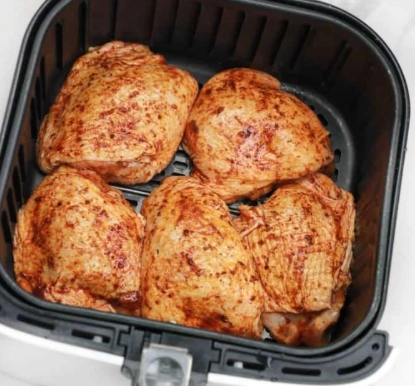
To Season Now or Later? (The Great Debate)
You can season right before cooking, but for deeper flavor, consider a dry brine. It's simpler than it sounds: after patting dry, sprinkle the thighs generously with kosher salt (about 3/4 teaspoon per pound) and place them on a rack in the fridge, uncovered, for anywhere from 1 hour to overnight. The salt draws out moisture, which then dissolves the salt and gets re-absorbed, seasoning the meat deeply and helping it retain juices during cooking. It also continues to dry the skin surface. Even 30 minutes makes a difference.
The Oil Question: A Light Hand Wins
You need some fat to conduct heat and encourage browning, but not a lot. After your thighs are dry and seasoned, drizzle or spray with just a half teaspoon to a teaspoon of a high-smoke-point oil per thigh. Avocado oil is my top choice. Grapeseed or refined olive oil work too. Rub it in gently. The goal is a very light, even sheen—not a pool of oil. The air fryer will render plenty of fat from the skin itself.
The Air Frying Process: Time, Temp, and the Crucial Flip
Here's the core of the operation. This isn't a "set it and forget it" protein. A little attention pays off hugely.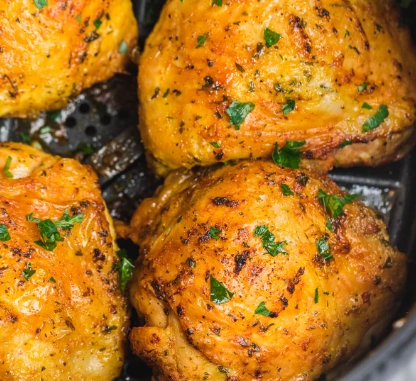
My Go-To Method for Perfect Air Fryer Chicken Thighs
- Preheat is Key: Always preheat your air fryer to 400°F (200°C) for about 5 minutes. Starting with a hot chamber gives you an immediate sear.
- Arrange with Space: Place the thighs skin-side up in the basket, leaving space between them. Don't crowd! Air needs to circulate. You may need to cook in batches.
- The Initial Crisp: Cook at 400°F for 12-14 minutes. This first phase is all about rendering fat and crisping the skin.
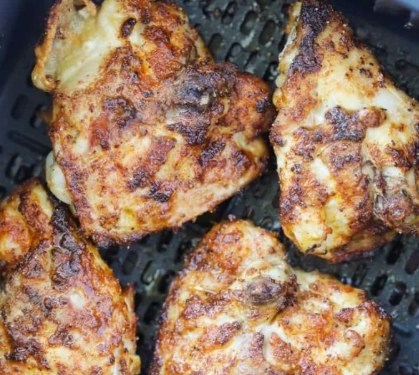
- The Flip & Finish: Flip the thighs skin-side down. This feels wrong, but trust me. It protects the now-crispy skin from getting too dark and allows the heat to attack the underside and bone area directly. Reduce the temperature to 375°F (190°C) and cook for another 8-12 minutes.
- The Final Test: The total time is a guide. The only way to know if your air fry bone in chicken thighs are done is with an instant-read thermometer. Insert it into the thickest part, avoiding the bone. You're aiming for 175-180°F (79-82°C). Why higher than the standard 165°F? For thighs, the slightly higher temperature helps render more of the tough connective tissue, making the meat more tender and juicy. It's a dark meat superpower.
That flip in the middle is my secret weapon. I learned it after a batch where the skin was perfect but the meat right against the bone was still pink. Flipping solves that.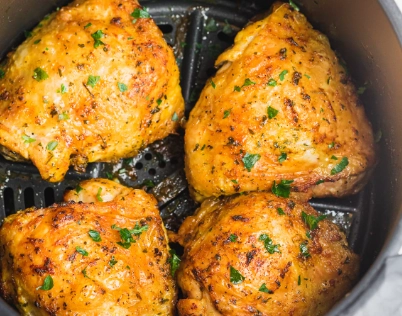
Air Fry Bone In Chicken Thighs: Time & Temperature Reference Table
| Thigh Size / Description | Initial Temp & Time (Skin-Side Up) | Second Temp & Time (Skin-Side Down) | Target Internal Temp | Key Result |
|---|---|---|---|---|
| Medium (6-7 oz each) | 400°F for 12 mins | 375°F for 8-10 mins | 175-180°F | Classic crispy/juicy balance |
| Large/Jumbo (8-9 oz each) | 400°F for 14 mins | 375°F for 10-12 mins | 175-180°F | Needs more time near bone |
| From Fridge Cold (no rest) | Add 2-3 mins to initial phase | Same | 175-180°F | Adjust for cold start |
| For Extra-Crispy Skin | 400°F for 14 mins | 375°F for 5 mins, then 400°F for 2-3 mins final blast | 175-180°F | Ultra-crackling finish |
See? It's not one universal time. A jumbo thigh from the fridge needs more time than a room-temp medium one. The thermometer is your best friend here.
Flavor Twists: Beyond Salt and Pepper
The basic method gives you perfect chicken. These variations make it spectacular. Apply these after patting dry and before the oil.
- The Classic Herb: Salt, pepper, garlic powder, smoked paprika, and a touch of dried thyme or rosemary. Timeless.
- Lemon-Garlic Zing: Salt, pepper, granulated garlic, onion powder, dried oregano. After cooking, squeeze fresh lemon juice and sprinkle with chopped parsley.
- Spicy Buffalo Dry Rub: Salt, garlic powder, onion powder, plenty of cayenne pepper, and a little brown sugar. After air frying, toss in a bowl with a splash of Frank's RedHot sauce mixed with a teaspoon of melted butter (the air fryer will have made the skin sturdy enough to handle it).
- Sticky Soy-Ginger Glaze (Post-Cook): While thighs cook, simmer 1/4 cup soy sauce, 2 tbsp honey, 1 tbsp rice vinegar, 1 tsp grated ginger, and a minced garlic clove until slightly thickened. Brush onto thighs in the last 2 minutes of cooking for a sticky glaze.
My personal favorite is a simple heavy dose of smoked paprika and garlic. It just works.
Troubleshooting: Fixing Common Air Fryer Chicken Thigh Problems
Even with a guide, things can go sideways. Here's how to fix them.
Fix: Be militant about drying. Cook in batches if needed. Ensure preheat and that first 400°F phase. Patting the skin dry mid-cook after the first render can sometimes help—just be careful of steam.
Fix: This is exactly why the two-stage temperature method (starting high, finishing lower) is so effective. If it's happening, next time lower the temp after the flip or tent the burnt skin with foil for the remainder of cooking.
Fix: Invest in a $15 instant-read thermometer. It's a game-changer for all proteins, not just when you air fry bone in chicken thighs. Pull at 175°F and let rest.
Letting Them Rest & Serving Ideas
Don't slice right away! Transfer the cooked thighs to a plate and let them rest for 5 minutes. This allows the juices, which have been driven to the center by the heat, to redistribute throughout the meat. If you cut immediately, all those juices will run out onto the plate.
What to serve with these glorious air fryer chicken thighs? They're incredibly versatile.
- Low-Effort Weeknight: A simple green salad or some steamed broccoli. The thighs are the star.
- Comfort Food Plate: Creamy mashed potatoes or cauliflower mash to soak up the juices. Maybe some corn.
- Lighter Option: A crisp cucumber salad or a quinoa bowl with roasted vegetables.
- For a Crowd: Make a big batch of thighs, let them cool slightly, then chop or shred the meat for incredible tacos, salads, or pasta dishes.
Important Food Safety & Authority Links
While I swear by the 175-180°F for thighs for texture, the official food safety guideline for all poultry is a minimum of 165°F (74°C) as measured with a food thermometer. This temperature is sufficient to kill harmful bacteria. You can read the official recommendation from the U.S. Food Safety.gov website. My recommended higher temp falls well within this safe zone and improves eating quality.
Furthermore, the science behind drying the skin for crispiness is related to the Maillard reaction and fat rendering. For a deep (and fascinating) dive into the food science of crispy skin, resources like Serious Eats' The Food Lab archives provide authoritative, scientifically-backed explanations that confirm these techniques.
Air frying bone-in, skin-on chicken thighs is less about following a single magic number and more about understanding a simple process: dry thoroughly, start hot to crisp, flip to finish evenly, and always trust a thermometer. It's a nearly foolproof way to get a restaurant-quality result with minimal clean-up. Once you get the feel for it, it'll become one of those back-pocket recipes you make without even thinking.
I still make them almost every week. Sometimes they're a little more done on one side because my air fryer's heating element is stronger in the back. Sometimes I get distracted and they go a minute too long. But you know what? They're still fantastic. That's the beauty of this cut and this method—it's incredibly forgiving as long as you stick to the core principles. Now go forth and get that skin crackling.
Reader Comments