Let's be honest. Most advice about meal prep breakfast sandwiches is too basic. "Cook eggs, assemble, freeze." That's it? No one talks about the soggy English muffins, the rubbery reheated eggs, or why your cheese turns into an oily pool. I've been making these for a decade, feeding a family of early risers and late sleepers, and I've made every mistake so you don't have to. This isn't just about saving time. It's about reclaiming your morning with a hot, satisfying breakfast that actually tastes good, straight from your freezer.
What's Inside This Guide?
How to Choose the Best Ingredients for Freezer Sandwiches
Your ingredients need to survive the freezer and the microwave or toaster oven. This is where most people go wrong first.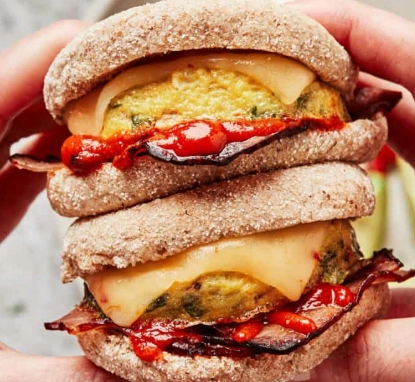
The Bread: Your Foundation
English muffins are the undisputed champion. Their nooks and crannies hold up beautifully, avoiding sogginess better than most breads. Whole wheat or sourdough English muffins add great flavor. Bagels work, but they can get too chewy when frozen. Biscuits? They often turn dense and lose their flakiness. Croissants become soggy almost instantly—save those for fresh eating.
The Protein: Eggs and Beyond
For eggs, you have options, but texture is king.
- Sheet Pan Eggs: The best method for bulk prep. Whisk eggs with a splash of milk or water, pour onto a parchment-lined sheet pan, and bake at 350°F (175°C) for 15-20 minutes. Let cool, then cut into squares that fit your bread perfectly. This yields a consistent, fluffy texture that reheats well.
- Scrambled Muffin Tin Eggs: Good for portion control, but they can dry out more easily. Grease a muffin tin well.
- Other Proteins: Cooked sausage patties, turkey bacon, or Canadian bacon freeze and reheat excellently. Pre-cooked ham slices work too. Avoid overly watery meats like some turkey sausages.
The Cheese and Extras
Cheese is your friend—it melts and binds everything. Cheddar, provolone, Swiss, and pepper jack are all great. Avoid pre-shredded cheese if you can; it contains anti-caking agents that can make it melt less smoothly. A thin slice works better than a thick block.
Want veggies? You must cook them first. Raw spinach wilts into a slimy mess. Raw onions or peppers stay crunchy and release water. Sauté mushrooms, spinach, bell peppers, or onions until all their moisture has evaporated and they've cooled completely before adding.
Step-by-Step: Assembling and Freezing Your Sandwiches
This is the process. Get it right, and you've won.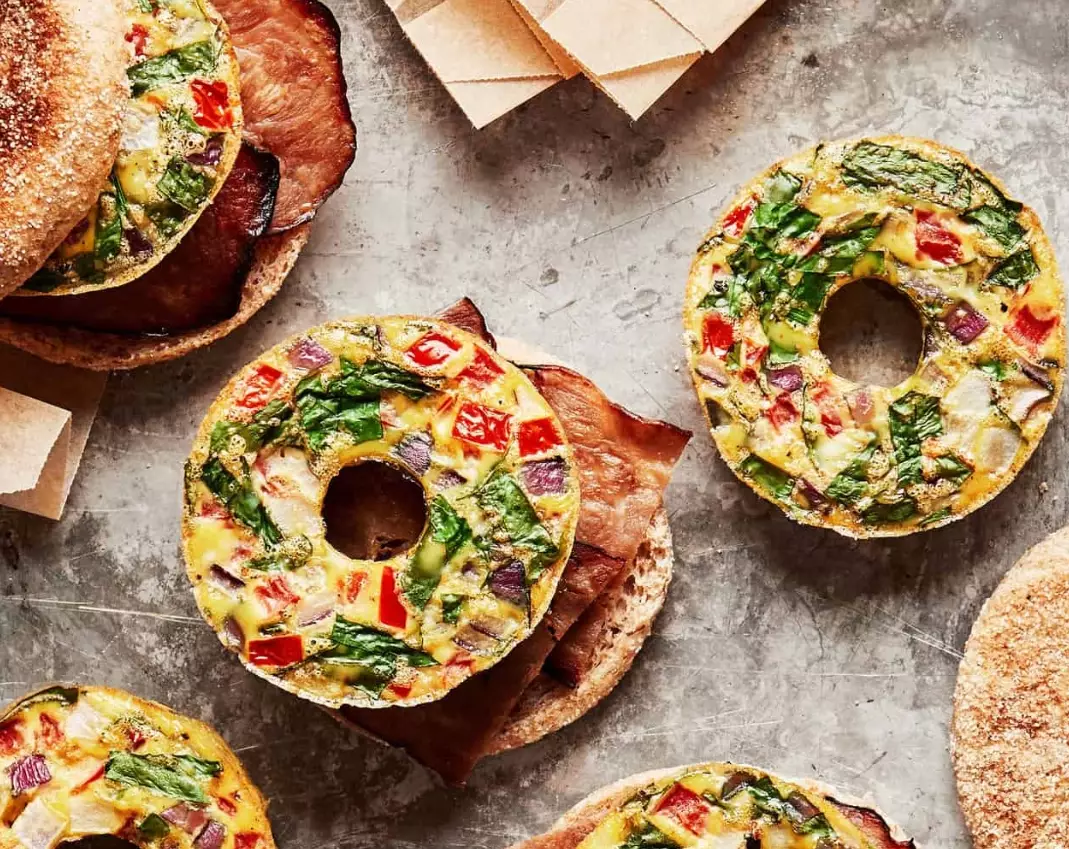
- Cool Everything Completely. I can't stress this enough. Assembling with warm ingredients creates steam inside the wrapping, which turns to ice crystals and later, sogginess. Let your eggs, meat, and sautéed veggies reach room temperature.
- Build Your Sandwich. Start with the bottom half of your lightly toasted bread. Add cheese first—this acts as a secondary moisture barrier. Then your protein (egg patty, sausage), then any extra veggies. Top with the other bread half.
- Wrap for the Freezer. First, wrap each sandwich tightly in parchment paper. This helps with moisture control. Then, seal it in a freezer-safe zip-top bag or wrap tightly in aluminum foil. Squeeze out all the air.
- Label and Freeze. Write the contents and date on the bag. They'll keep for 2-3 months for best quality, though they're safe longer.
The Secret to Reheating Them Perfectly (Not Soggy!)
You didn't come this far to eat a soggy sandwich. Do not microwave straight from frozen in its wrapper.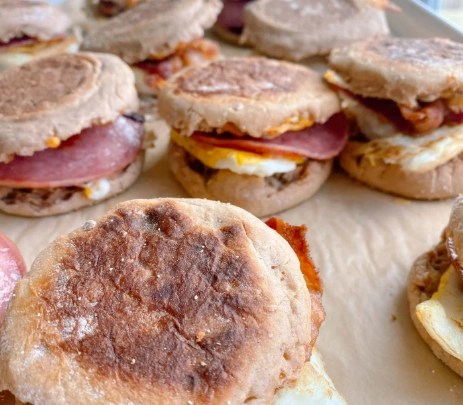
Best Method (Toaster Oven/Oven): Unwrap the frozen sandwich. Wrap it loosely in foil (if it wasn't already) and place it directly on the rack. Heat at 350°F (175°C) for 20-30 minutes, until hot through. For a crisper exterior, unwrap for the last 5 minutes.
Good Method (Microwave + Toaster): Unwrap the frozen sandwich. Microwave on a plate for 1 minute to thaw and warm the interior. Then, finish in a toaster oven or regular toaster (if it fits) for 3-5 minutes to crisp the bread. This two-step process mimics the best results.
Slow Morning Method (Refrigerator Thaw): Move a sandwich from the freezer to the fridge the night before. In the morning, unwrap and heat in a toaster oven or air fryer for 5-7 minutes until hot and crispy.
3 Customizable Make-Ahead Breakfast Sandwich Recipes
Here are three frameworks. Mix and match based on what you have.
1. The Classic (Sausage, Egg & Cheese)
This is the crowd-pleaser. Use high-quality pork or chicken breakfast sausage patties. A sharp cheddar cheese pairs perfectly. I like adding a tiny smear of whole-grain mustard under the cheese for a flavor boost no one expects.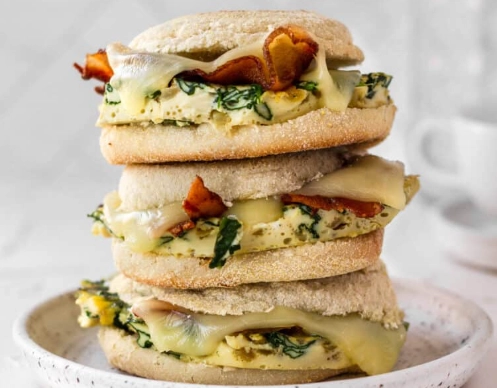
2. The Veggie-Packed (Spinach, Mushroom & Swiss)
Sauté 8 oz sliced mushrooms and 4 big handfuls of fresh spinach in a pan until all the liquid is gone. Let it cool completely. Combine with your sheet pan eggs and a slice of Swiss cheese on a whole wheat English muffin. It feels gourmet but is so simple.
3. The Canadian (Canadian Bacon, Egg & Pepper Jack)
Lighter but full of flavor. Canadian bacon is lean and reheats well. Pepper jack cheese adds a nice kick. Sometimes I add a thin slice of tomato after reheating for freshness.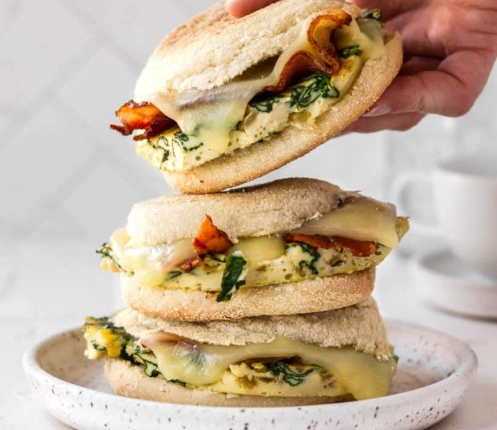
| Ingredient Component | Best Freezer Choices | Avoid for Freezing |
|---|---|---|
| Bread | English Muffins, Bagels, Artisan Rolls (toasted first) | Soft Sandwich Bread, Croissants, Untoasted Biscuits |
| Eggs | Baked Sheet Pan Eggs, Firm Scrambled | Fried Eggs (runny yolk), Soft Scrambled |
| Cheese | Cheddar, Provolone, Swiss, Pepper Jack (sliced) | Fresh Mozzarella, Cream Cheese, Crumbled Feta |
| Vegetables | Sautéed Spinach/Mushrooms/Peppers (cooled, dry) | Raw Lettuce, Tomato Slices, Cucumber |
Reader Comments