Quick Navigation
- Why Bother Cutting Your Own? The Real Benefits
- The Non-Negotiable First Step: Your Knife
- Prepping the Chicken Breast: The Foundation
- The Core Technique: Finding the Grain and Cutting Against It
- Pro Tips & Troubleshooting: Beyond the Basic Cut
- From Cutting Board to Pan: How Cutting Affects Cooking
- Answers to Common Questions (Stuff You Might Be Wondering)
- Putting It All Together: Your Action Plan
Let's be honest. We've all been there. You find a great recipe for crispy chicken tenders, grab a boneless, skinless chicken breast, and start hacking away. The result? Uneven strips that cook all wrong—some are done in a flash and dry as sawdust, while others are still weirdly raw in the middle. It's frustrating. It wastes food. And it turns a simple meal into a disappointment.
I used to think it was just me. Maybe my knife was bad, or my chicken was weird. But after years of cooking (and plenty of failed attempts), I realized the problem wasn't the chicken. It was how I was cutting it. Learning how to cut chicken breast into tenders the right way is a total game-changer. It's the difference between a mediocre dinner and a restaurant-quality one you can make at home.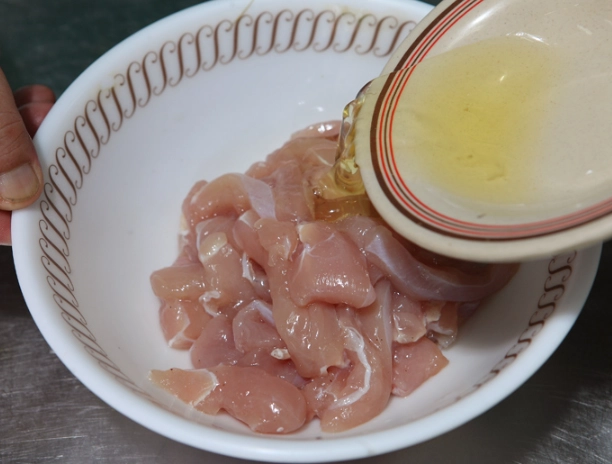
This isn't about fancy chef tricks you'll never use. It's about simple, logical steps that make sense. We'll talk about why chicken breast gets tough, how to work with its natural grain, and the one tool that matters more than anything else. By the end, you'll know exactly how to make chicken tenders that are consistently juicy, evenly cooked, and perfect for everything from salads to stir-fries to the classic kid-friendly favorite.
Why Bother Cutting Your Own? The Real Benefits
You can just buy pre-cut tenders at the store, right? Sure, you can. But have you ever looked at the price per pound? It's almost always more expensive than a whole breast. Cutting them yourself saves money, plain and simple. But there's more to it.
When you cut your own, you have complete control. You decide the size and thickness. You can trim off every last bit of fat or sinew that the factory might have missed. You know exactly what you're getting. Store-bought tenders can be inconsistent—some are huge, some are tiny. When you're the one wielding the knife, every piece is just how you like it. This control is crucial for even cooking, which is the holy grail of avoiding dry chicken.
The Non-Negotiable First Step: Your Knife
You wouldn't try to paint a wall with a toothbrush. Don't try to cut chicken with a dull, flimsy knife. This is the single most important factor in learning how to cut chicken breast into tenders safely and cleanly.
A sharp chef's knife, around 6 to 8 inches, is your best friend. A dull knife requires more force, which means you're more likely to slip and lose control. A sharp knife glides through the meat with gentle pressure. It gives you precision. It's actually safer.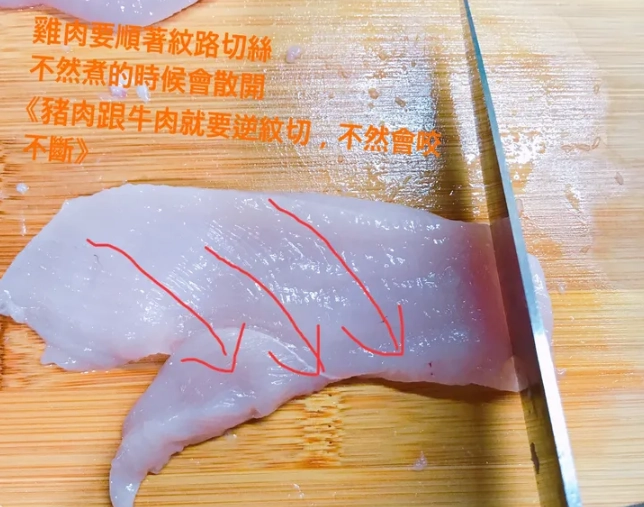
I made the mistake for years of using whatever knife was on the magnetic strip. It was a nightmare. The chicken would tear and shred instead of cutting cleanly. Once I started keeping my main chef's knife properly sharpened (I use a simple handheld pull-through sharpener every few weeks), the whole process became effortless. The cut surface is cleaner, which some say even helps the chicken retain more juices.
Knife Options: A Quick Comparison
| Knife Type | Best For | Why It Works (or Doesn't) |
|---|---|---|
| Sharp Chef's Knife (6-8") | Everyone. The ideal choice. | Versatile, offers control, clean cuts. The perfect balance of weight and precision. |
| Serrated Knife | Bread, tomatoes. Not chicken. | Will shred and tear the meat fibers. Avoid for this task. |
| Small Paring Knife | Peeling, detail work. | Too small for the long, smooth strokes needed. Lacks control for larger pieces. |
| Dull Knife (Any Kind) | Creating frustration and hazard. | Forces you to push down hard, increasing slip risk and mangling the meat. |
See? It's not complicated. Grab your trusty chef's knife and make sure it's sharp. That's 80% of the battle won right there.
Prepping the Chicken Breast: The Foundation
Okay, knife is sharp. Now, the chicken. Start with a boneless, skinless breast. Pat it completely dry with paper towels. This is a step everyone skips, and it's a mistake. Wet meat slides around on the cutting board. Dry meat stays put. It's a basic safety thing, and it gives you a better grip.
Next, take a look at it. Chicken breasts are almost always uneven—thicker at one end, thinner at the other, with a little fat pocket on one side. If you try to cut this lumpy thing into strips as-is, you'll get a mess. We need to create a more uniform piece of meat first. This is called "butterflying" or "halving" the breast horizontally.
Place the breast flat on the board. Place your non-cutting hand on top to steady it. With your sharp knife parallel to the board, slice horizontally through the middle of the thickest part, as if you were trying to open a book, but don't cut all the way through. Stop about half an inch from the edge, then open it up like a book. For very thick breasts, you might even cut it all the way through to create two thinner, more even cutlets. This step is crucial. It transforms an awkward, bulbous piece of meat into a flat, even canvas. Now, cutting it into uniform strips is easy.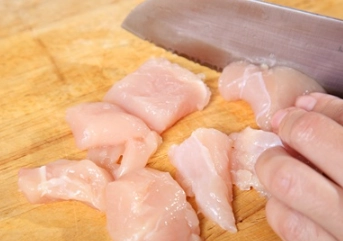
The Core Technique: Finding the Grain and Cutting Against It
This is the secret. The single piece of knowledge that separates okay chicken strips from fantastic ones. Look at the surface of your now-flattened chicken breast. See those long, parallel lines running through the meat? That's the grain. It's the direction the muscle fibers run.
If you cut with the grain (parallel to those lines), you get long, stringy strips. When you bite into them, you're biting into the full length of tough muscle fiber. That's what makes chicken feel rubbery or chewy.
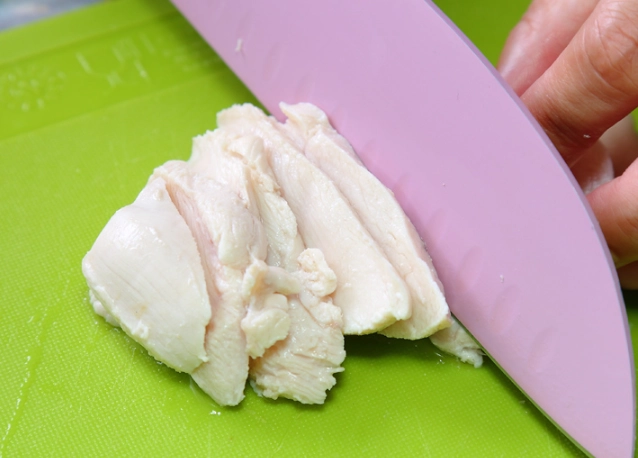
You want to cut against the grain (perpendicular to those lines). This severs the long muscle fibers into short segments. When you bite into a tender cut this way, the short fibers give way easily. The result is tenderness in every bite. It's the same principle used for cutting steak.
So, identify the grain. Turn your breast so the grain runs left to right in front of you. Then, you'll cut straight down, from top to bottom, across those lines. This is the heart of learning how to cut chicken breast into tenders properly.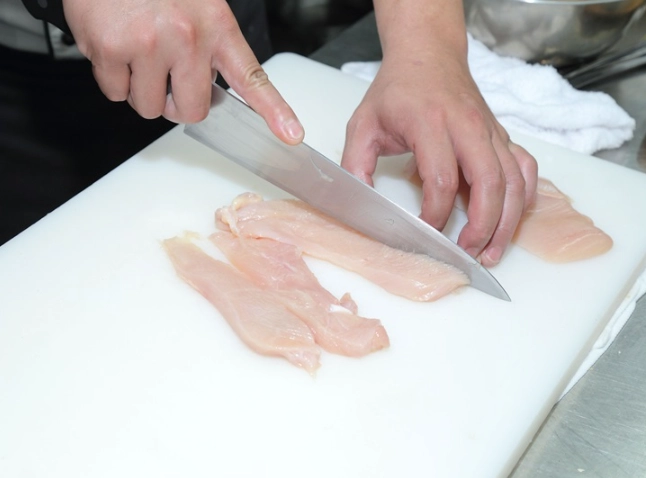
Step-by-Step: The Actual Cutting Process
- Flatten & Find Grain: Start with your butterflied, patted-dry breast. Identify the direction of the grain.
- Trim (Optional but Recommended): See that tough, white tendon-like piece on the side? The tenderloin? You can remove it and cook it separately, or just trim off any obvious fat or connective tissue. It makes for a more pleasant eating experience.
- Slice into Strips: With the grain running horizontally, make vertical cuts. The width is up to you. For classic tenders, aim for strips about 1 to 1.5 inches wide. Want them for fajitas? Go thinner, about 1/2 inch. Use the full length of your knife in a smooth, rocking motion.
- Consistency is Key: Try to make each strip the same width. This isn't about being perfect, but similar-sized pieces cook at the same rate. That's the whole point of this exercise!
And that's it. You've done it. You now know the fundamental method for how to make chicken tenders from a whole breast.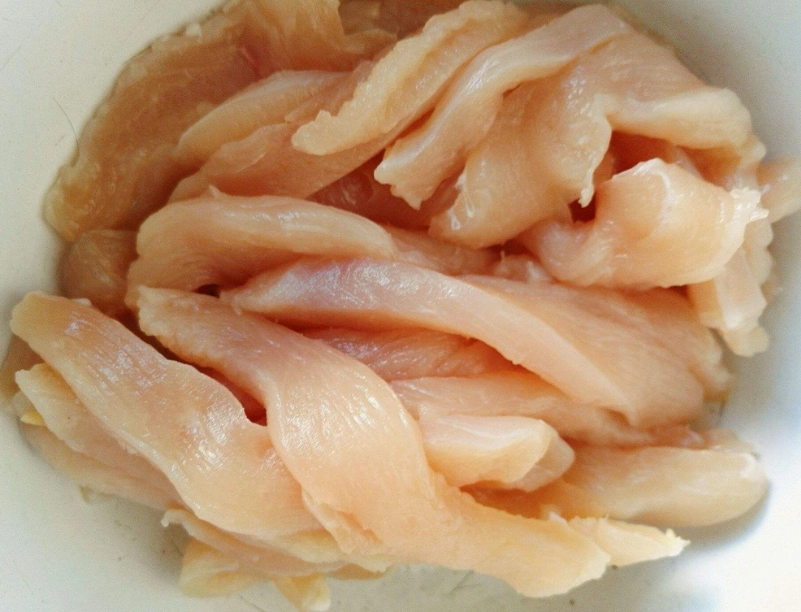
Pro Tips & Troubleshooting: Beyond the Basic Cut
You've got the basics down. Now let's make you a pro. Here are the little things that make a big difference.
For Even More Consistent Thickness: If your breast is still a bit uneven after butterflying, place it between two sheets of plastic wrap or parchment paper and gently pound the thicker areas with a rolling pin, skillet, or meat mallet. Don't pulverize it; just even it out. This guarantees every part of every strip is the same thickness.
Keeping Things Clean: Raw chicken requires hygiene. Have a dedicated "chicken cutting" area. As soon as you're done, wash the knife and cutting board with hot, soapy water immediately. I wipe down my counter with a disinfectant spray, too. It's a habit that prevents cross-contamination. The USDA's food safety guidelines are a great resource for best practices, especially their advice on safe minimum internal temperatures (165°F for poultry).
What if my strips are still uneven? Don't sweat it. If you end up with a few strips that are much thicker than others, just give those a few gentle whacks with the flat side of your knife to flatten them out a bit. Cooking is adaptable.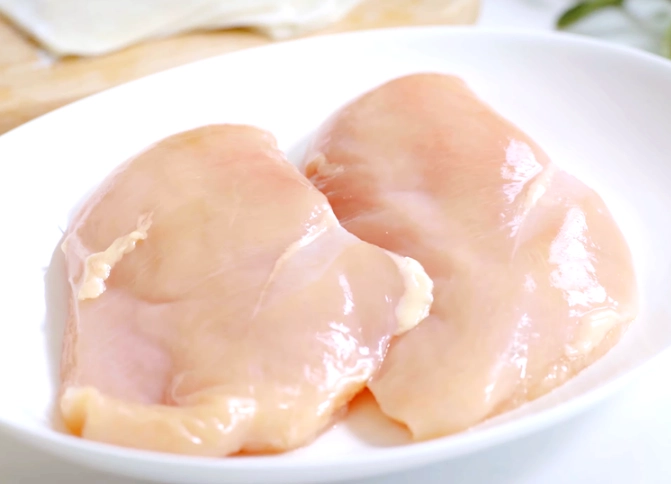
From Cutting Board to Pan: How Cutting Affects Cooking
This isn't just a prep step. How you cut directly determines how you should cook. Thin strips (1/2 inch) are perfect for quick-cooking methods like stir-frying, sautéing, or tossing into a soup at the last minute. They'll be done in 3-4 minutes.
Your standard 1-inch tenders are versatile. They're great for breading and baking, pan-frying, or grilling. They need a bit more time, maybe 5-7 minutes per side depending on the method. Because they're uniform, they'll all be done together.
The worst thing you can do is throw a pile of uneven strips into a hot pan. The thin ones will be overcooked and dry by the time the thick ones are safe to eat. Proper cutting solves this problem before it even starts.
Answers to Common Questions (Stuff You Might Be Wondering)
Putting It All Together: Your Action Plan
Feeling overwhelmed? Don't be. It's simpler than it sounds. Here’s your cheat sheet for the next time you want to cut chicken breast into tenders:
- Sharpen your chef's knife.
- Pat the breast dry. Always.
- Butterfly it to create an even thickness.
- Find the grain (those parallel lines).
- Cut straight down, perpendicular to the grain, into 1-inch strips.
- Aim for consistency. Similar size = even cooking.
- Cook immediately or store properly.
- Clean everything thoroughly.
That's the whole process. It takes maybe 5 extra minutes compared to hacking randomly, and the payoff is huge. You get more tender chicken, less waste, more control over your meal, and the satisfaction of a skill done well.
Look, cooking isn't about being perfect. It's about making food you enjoy eating. Learning how to cut chicken breast into tenders correctly is one of those small, foundational skills that pays off every single time you use it. It makes weeknight dinners better. It impresses if you have guests. It just makes sense.
So next time a recipe calls for chicken strips or tenders, skip the expensive pre-cut package. Grab a whole breast, take a deep breath, and put this guide into practice. Your taste buds ( and your wallet) will thank you.
Reader Comments